
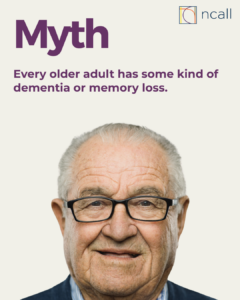
 This week in our WEAAD Myth vs. Fact campaign, we are highlighting how ageist misconceptions about dementia and capacity can increase risk for abuse in later life.
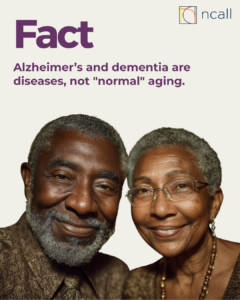
Too often, signs of confusion are mistaken for a total loss of decision-making capacity—silencing older adults and excluding them from meaningful choices. In reality, capacity is decision-specific and can change over time. With the right supports such as clear communication, familiar environments, extra time, or trusted supporters, many older survivors with dementia can continue to share their experiences, express their preferences, and make informed decisions. By recognizing and supporting capacity, we can center the survivor and help preserve their autonomy.
 You Can Make a Difference
Join NCALL in challenging harmful myths and promoting dignity, respect, and person-centered approaches to aging. Please consider donating to NCALL to help us deliver critical training and resources and create impactful awareness campaigns like this.