
 Dive into Week 3 of our World Elder Abuse Awareness Day (WEAAD) Myths vs. Facts Campaign!
This week, we’re tackling ageism head-on. Let’s challenge misconceptions together!
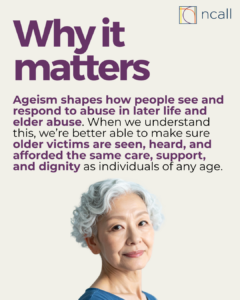
Ageism is often subtle, but its effects are serious and far reaching. Ageist assumptions—such as questioning older adults’ credibility or autonomy—can lead to abuse being dismissed or misunderstood, with serious consequences for safety, access to services, and justice.
These biases don’t just shape attitudes; they influence policies, professional practices, and service delivery. At NCALL, we know that older survivors experience abuse in complex ways that require age responsive, trauma informed, and survivor centered responses. Challenging ageism is essential to ensuring older adults are met with dignity, respect, and meaningful support.
As we approach World Elder Abuse Awareness Day (June 15), we invite you to reflect on how ageist bias shows up in your work and to commit to recognizing that each older adult is a unique individual with lived experiences and history. Ending abuse requires more than awareness; it requires action, accountability, and systems that value older adults as whole people.
Get involved:
• 🔁 Share this post
• 🙋🏿Take the NCALL pledge
• 🤲❤ Support our work